Arquivo de Sem Categoria - Page 12 of 14 - Team Transformerz


News

GRID VIEW

No more posts


A simple daily walk with your dog can be an important help in making you achieve your goals.

Most people lead an extremely sedentary lifestyle, because they spend most of the day working at a desk or watching television.

This leads many people to believe that the cause of their problems is directly related to the fact that they have a very slow metabolism, thinking that they get fat by just looking at food.

Evidently, some people have endocrine problems that make fat loss hard, but the truth is that most people don’t possess any kind of illness. What they do have is a lack of “MOVEMENT” problem!

Imagine that you train 3x a week for 1h. That indicates that you’re effectively burning a high amount of calories for only 3 of the 168 hours that a week has.

Here resides the importance of NEAT (Non-Exercise Activity Thermogenesis), which consists in the amount of calories spent when we’re not exercising. By this we mean when we’re cooking, vacuuming the house or walking our pet.

neat

It has been proven thanks to scientific studies, as you can see here (http://www.ncbi.nlm.nih.gov/pubmed/15102614) that NEAT can be the most important factor for fat loss, even more than physical exercise, when combined with your resting metabolism.

So, with our coaching programs, we aim for our clients to have a more active lifestyle. Not only thanks to training but also thanks to their lifestyle.

The only way you can achieve your goals is if you’re doing what you most like in your daily routine! People who don’t like to eat fish will never be able to diet if they’re obliged to eat it!

This is why we’re always saying the same thing in our posts. In all of our coaching programs we DEMAND that our clients respect their PERSONAL PREFERENCE.

SUSTAINABILITY and CONSISTENCY are the secret to being succesful in all areas of our life.

References:

LEVIN, J.A. (2004), “Nonexercise Activity Thermogenesis (NEAT): Environment and Biology.” Am J Physiol Endocrinol Metab: 286(5):E675-85.




aplicativos-ajudar-alimentacao-saudavel-2.jpg


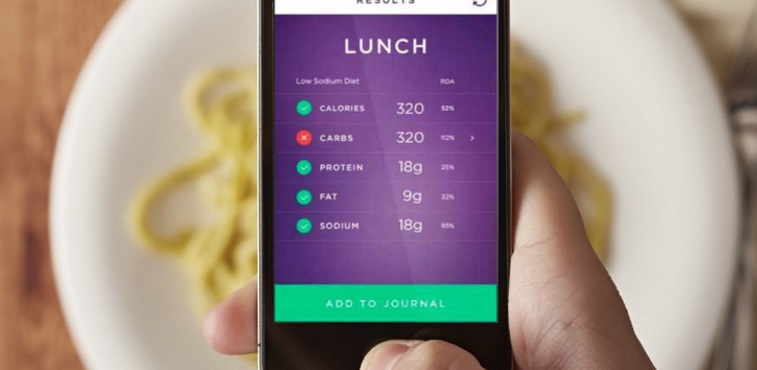
If you truly wish to optimize your approach regarding nutrition, you’ll have to consider flexible dieting, where you’ll calculate your macros on a daily basis.

The three macro nutrients (macros) that exist are protein, carbohydrates and fats. By monitoring these three, you will be able to increase or maintain your muscle mass when you’re Bulking/Cutting or in Maintenance. This allows you to have a greater freedom within your food consumption as well as your lifestyle.

Did we just say calories? Yes!!!

Calories are the kings and queens of our diet.

Calories are energy measuring unit that our body uses to survive. They determine if you gain or lose weight, meaning that you can only lose or gain weight if you’re in a caloric deficit/excess.

RELATED: HAMSTRINGS…THE SEARCH OF THE LOST CONTINENT!

When you combine the two motorizations, of calories and macro-nutrients, you’ll be provided with greater sustainability within your daily routine. There are no restrictions, no good or bad foods, no fairy tales. There is a nutritional content, which is a very important factor in your transformation.

It’s also crucial to keep a sound mind.

In a study done at Louisiana State University and Pennington Biomedical Research Center that had as a goal finding out the symptoms of eating disorders that were connected to diets, they tested the influence of a restrictive diet versus a flexible diet on 188 women.

The results showed that those who followed a restrictive diet had more symptoms of eating disorders, mood changes and greater concerns about their physical appearance than those you followed a flexible approach. These effects were felt throughout the entire study, they were constant. (http://www.ncbi.nlm.nih.gov/pubmed/11883916)

In your diet, science plays a vital role, your body works in a very specific way. On the other hand, your mind also need very special attention. When you follow a flexible diet, you can take advantage of that, using it as a sculpting tool for you to create your “sculpture”.

As soon as you can dominate these factors thanks to a scientific approach, nothing will be out of your reach. You are your own limit.


Pull-Up-2-2.jpg


Bad performance on Pull-ups? Then you have to train them more often. Start every workout with 20 Pull-ups, done in the least time possible, using various mini-sets with reps only as high as the maximum you can achieve. Ex: Your max is 6 Pull-ups, do mini-sets of 3.

Use a watch or a times to monitor the time it takes you, so that every time you try this, you aim to beat your previous record.

RELATED: DÁRIO’S TRANSFORMATON!

Here are a few tips:

  1. If your max rep number is 4-5, split that up into mini-sets of 2 reps, while resting as little as possible. 20 seconds should be enough to regain your breath.
  2. If, when you do the second repetition on the second set, it feels hard, increase the rest time to 30 seconds.
  3. If it’s still hard with that longer rest time, you’re better off doing sets of 1, while resting only between 15 and 20 seconds.

As you progress, you’ll be able to do more than two reps in a mini-set, but remember that the progression should be slow. Once again, monitor the time it takes you to perform the 20 repetitions. As the number of reps in each mini-sets increases, the total execution time should diminish.

Ideally, in 8-10 weeks you’ll be able to perform the 20 pull-ups in two sets while only resting 20 seconds. When that happens, you’ll probably be able to perform 15 Pull-ups in a row with no trouble.

RELATED: WOMEN SHOULDN’T BENCH PRESS

Progression method:

As soon as you can perform the 20 reps in two sets, with no more than 30 seconds rest, increase the total goal to 30 reps.

Eventually, when you’re able to perform 30 reps in two sets with only 20 seconds rest in between, go back to a 20 rep goal. But, this time, add a 5-10kg to your waist and start the progression once again!


When we’re talking about losing weight, eating less and training more is the mantra by which many people lead their lives. Truth be told, it can do wonders, but it definitely works forever. That’s why during our coaching programs we try to keep cardio for times where cutting calories becomes too hard. This way we can use it in our favor and provide a little more flexibility to our clients’ caloric intake. But, when you cut any further, you have to turn the process around! That’s where reverse dieting comes in!

What is reverse dieting?

Just as the name says, it’s a diet process that will revert the metabolism after a restriction period. To lose weight, it’s known that the whole process has to do with an energetic balance of the calories that we ingest and burn throughout the day. So, when our body is in a caloric deficit, it tends to, after a while, lower it’s metabolism since it has less energy available.

Many people, after they do a cutting phase, they restart a bulk. Consequently, they gain fat, because they go in a very abrupt way from a caloric deficit into a caloric overload. If, during a bulk they gain more than 5% fat, then something is wrong.

Reverse dieting will benefit you very much in this phase, since with gradual increases in your caloric intake, you will allow your metabolism to better adapt, managing the energy it has available in a more efficient way, not accumulating as much excess fat.

Normally these increments vary between 80-100kcal per week.

Key points to reverse dieting:

  1. Calculating calories and macros in an initial phase;
  2. Define caloric increments while bearing caloric and macro nutrient goals in mind;
  3. Monitor your weight throughout the weeks to control your weight increase.

Advantages of reverse dieting:

  • It allows you to progressively eat more, easing your mind out of a caloric deficit;
  • It’ll give you more energy, since the caloric intake will increase, giving you better workouts and more strength;
  • It will allow you to prolong your cutting phase and maintain good physical condition long term.

Just like we have said on other occasions, we include the best strategies for your success and especially, use them in the most intelligent way. This way we can grant better results with less effort.


Capture2-2.png

Even though the female fitness world is ever growing, for women, the first contact with the gym can be quite hard (for men too, but they don’t admit it). Unfortunately, this industry still encourages some myths and even the people have a tendency to indulge in these myths, which are everything but true, we’ll have you know

Mistake nº1 – Obsession with toning and being afraid of the “iron”

For many women, their goal is to tone their body. This search has led to the appearance of many programs that consist of light weight utilization in exercises that are a bit odd, to say the least. This is not the best way to achieve this goal.

In order to become toned, you need to lose excess body fat and increase muscle cell size. This way you can improve your body composition (that means the shape of your body).

RELATED: THE TRICK TO DO MORE PULL-UPS!

Solutions?

The most important factor in toning is your diet. Starting a flexible diet can be a great advantage, since it focuses solely on ingested energy, calories and macro-nutrients (protein, carbohydrates and fats). This will allow you to manipulate your weight and consequently the appearance of your body, maintaining a healthy balance between fat loss and muscle mass increase.

After good nutrition comes training. And don’t fool yourselves, “weights” are not just for men. Even though an olympic barbell, with many plates on each side, doesn’t fit in most make up kits, it should be used just as often. The weight might be intimidating, but it’s a good way to increase resistance in specific movements, especially in the correct amounts. If it isn’t hard, you should increase.

It isn’t the weight of the dumbbells that makes men be men, but their hormones. So there’s nothing to fear regarding the “weights”, because it won’t change your gender…

Mistake nº2 – Not adjusting rest intervals during training

During physical exercise, our body is highly stimulated, it suffers tears, burns resources, etc… So, the frequency and duration of rest intervals are two very important factors in a workout’s “drive”. It’s during these times that our body recovers.

Adjusting rest interval duration between sets can make all of the difference in order to have a successful workout. Especially in our mind, which makes this control a bit harder thanks to procrastination. Who doesn’t like those extra 30 seconds rest?

RELATED: MARCO’S TRANSFORMATION

Solutions?

Rest time will ultimately depend on the exercise performed (volume and intensity). Various studies show that athletes, during strength workouts, achieved better results by resting between 3-5 minutes. But, better hypertrophy results were achieved by resting between 30-60 seconds! You can see this information in the following link:(http://www.ncbi.nlm.nih.gov/pubmed/19691365)

So:

  • For strength exercises or big lifts use 2-3 minutes rest, especially if you’re trying maximal loads.
  • You can also use the exercise-rest ratio 2:1, meaning that a 1 minute exercise should have 20-30 seconds rest.
  • When you’re performing high intensity workouts, you can use supersets, by performing consecutive exercises with only 10-30 seconds rest.


squatsite-2.jpg

It’s most certainly summer for many of you, summer days get longer and longer, nights out with the buddies become more frequent… The only thing missing in all of this is that full pump in the muscles during your workouts, right?

Training always focuses on our body’s motor development in each exercise, meaning that muscular/articular performance has a tendency to increase with training. Many people try out several variations, like the differences in range of motion to determine what the most efficient one is for the development of a certain muscle.

Should you primarily partial ranges of motion during a workout?

Probably not…

Today we know that full range of motion works/recruits more muscle fibers than partial range of motion. Even though partial ranges allow greater load, a full range ends up having greater benefits. So, full range of motion should be included in any exercise for better performance, but it might not be the answer you’re looking for. Bear with us.

Let’s imagine that you’re performing a flat bench press, there are certain portions of the movement where you feel greater resistance or difficulty, right? This is where partial movements can come into play.

RELATED: DÁRIO’S TRANSFORMATION!

Using a partial range during some exercises to hit a certain portion of the muscle can be the secret to overcome weaknesses. Especially in portions of the movement where you’re weaker or less efficient in terms of muscular-articular motion.

So, the solution always comes back to science, finding the best tools for each task:

  • A full range of motion leads to better results, both in strength and in muscular development. It should be included in any exercise.
  • Partial ranges are good tools to work weak points in certain portions of the muscle.

References:

http://www.ncbi.nlm.nih.gov/pubmed/15320644

http://www.ncbi.nlm.nih.gov/pubmed/22027847


cervejasite-2.png

At Team Transformerz, we don’t advise the consumption of alcoholic drinks. But, we know that for many of you they are a good way to cope with rising temperatures, because after all, there is nothing better than an ice cold pint while you watch the sunset on the beach, is there?

Alcoholic beverages also count in your diet, since they contain macro-nutrients, meaning that they also have an energetic value for our body. As you well know, this is the decisive factor for weight loss/gain. Still, when it comes to alcohol, it’s specific amount is not always known. Still, you can perfectly count it, let us explain:

  • Alcohol is a carbohydrate, it’s part of the carbohydrates family, it gives us 7kcal per gram, contrasting with its remaining carbohydrates family, which provides only 4kcal per gram
  • So, if we decide to drink alcohol, we must take into account the alcoholic percentage of the drink so that we can correctly calculate its nutritional value.

RELATED: WHAT IS REVERSE DIETING?

How can I calculate its caloric value?

This step will depend on the circumstance. Generally, grams of alcohol don’t come labelled as carbs, so we have to calculate them from the alcoholic percentage of the drink (usually it’s on the label).

Example:

Generic beer (250 ml) with 5% alcohol has a total energetic value of 108kcal, with 9g of carbs and 1,1g of protein.

The alcoholic volume allows us to know that 12,5 ml of said beer will be alcohol.

We know that 1000ml of pure alcohol weighs around 791,5g, so, our beer will have around 9,9g of alcohol, which represents 69,3kcal.

It becomes harder to quantify the amount of alcohol when we don’t know its origin, like when we drink a cocktail (various) in a public establishment.

Still, it’s possible to do using generic values³, for example:

1 glass of lemon vodka with 100 ml of vodka (or four English shot measures). If you know that alcohol volume in vodka is around 38&, then, it’ll have 38ml or 30g of alcohol.

So, can alcohol be considered a ghost macro-nutrient?

In a certain way, yes. But even though it’s quantity isn’t explicit, it does have an influence on your caloric intake and should be monitored, since it’ll have an impact on your body and mind. So, alcohol can make you fat, but once again, the determining factor will be its energetic value, its calories. They will dictate weight loss/gain.

It still has other effects, as various studies demonstrate, like alcohol inhibiting protein synthesis, suppressing the anabolic response rate in muscle fibers. This means that it can also affect your workouts, since muscle recovery is put at risk.

That’s why moderation in alcohol consumption is important, be it regarding your diet or your training. Be responsible.

RELATED: POSTERIOR DELTS, ANOTHER FORGOTTEN MUSCLE!

References:

  1. https://examine.com/supplements/Alcohol/
  2. http://www.ncbi.nlm.nih.gov/pubmed/24533082
  3. https://pt.wikipedia.org/wiki/Teor_alco%C3%B3lico
  4. http://www.ncbi.nlm.nih.gov/pubmed/11584159


depois-2.png

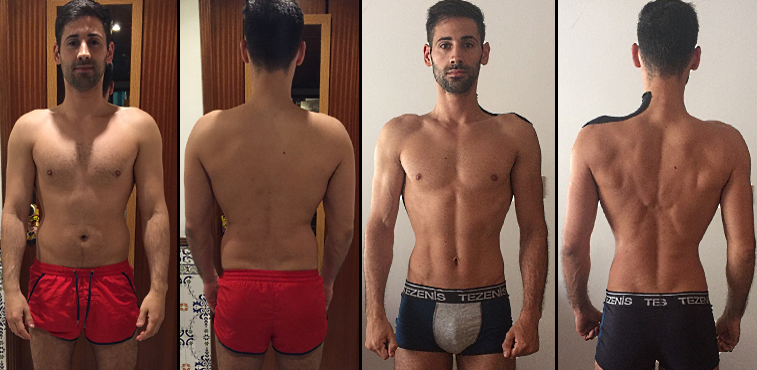
Fábio Jarimba joined our team because he decided (as we should) to dedicate himself more to himself, losing the body fat that he had always dreamed of losing.

Even though he subscribed to our 32 Week Total Body Recomposition program, we decided to share his shape at 14 weeks of coaching.

RELATED: EUNICE ROSADO’S 8 WEEK TRANSFORMATION

Now, in the 17 weeks that are left in Fábio’s coaching program, we’ll focus on losing a little more body fat, so that we can start a reverse diet that will allow Fábio to finish the 32 weeks of coaching with a lower body fat percentage than when he started, with more muscle and, above all, eating more calories than when he started!

Like this we will be able to do the body recomposition that we had set out to do from the beginning.

A body recomposition consists in “altering” a person’s physical shape by diminishing their body fat and considerably increasing their muscle mass. Also, throughout a body recomposition program, the goal is always to optimize people’s metabolism, so that they finish the program eating more calories than their maintenance calories when they started (calories that people need to ingest daily so to maintain their weight), always accompanied by a significantly better physical shape.

To put it simply, thanks to a body recomposition it’s possible to achieve less body fat, more muscle mass and eat more calories than we were before! So, it’s everyone’s dream!

RELATED: WHAT IS REVERSE DIETING?

Here is the approach we took throughout these 14 weeks of coaching:

  • When he started working with us, Fábio weighed 69,9kg, is 27 years old and is 1,7m tall.
  • So, our first indications were that he ate 2200 daily calories in his first week, plus 3600kcal on the last day of said week. These calories contained no restrictions regarding macro nutrients.
  • After the 5th week of coaching, Fábio presented an average of 67,6kg, with visible progress regarding his definition. From there on his macros were: Protein: 154g Fat: 57g Carbs: 231g. He also had a “high day” of 3450kcal.
  • After the 10th week of coaching, Fábio weighed around 65kg and was ingesting around 1953 calories (Protein: 160g / Fat: 57g / Carbs: 200g), being allowed 2 “high days” of 2688 calories (Protein: 160g / Fat: 72g / Carbs: 350g).
  • During his 14th week of coaching, unfortunately, Fábio suffered a shoulder injury, which impeded him of training his upper body for a while. So, we developed a workout program that focused solely on his lower body and abs, so that Fábio could maintain his motivation as well as keep progressing. After this 14th week, Fábio weighed an average of 63,7kg.
  • At this point Fábio is eating around 1855 calories (Protein: 160g / Fat: 55g /Carbs: 180g) plus 2 “high days” of 2590 calories (Protein: 160g / Fat: 70g / Carbs: 330g).

So, if you notice, Fábio lost around 7,2kg in 14 weeks of coaching, an average of 0,5kg per week and only decreased his daily caloric consumption in around 350kcals. This was our approach, because we always want our clients to have results without having to undergo hunger and do useless sacrifices that end up making their metabolisms slower, prohibiting them of having sustainable and consistent medium/long term results.

RELATED: HOW TO PROPERLY TRAIN ABS!

As you can imagine, it has been a pleasure to work with Fábio, because he’s the type of person that even after suffering an injury, continued to stay motivated and make progress. So, we’re very proud of his work and dedication! Thank you Fábio!

So, if you’re interested in doing as Fábio did and get started on your transformation, get in touch with us through our Contacts page.


mind-diet-2.jpg


Dieting can be a tough progress, for both the body and the mind. Specially in a cutting phase, with a high caloric deficit, where some macro-nutrient goals significantly lower (consequently the number of total calories will be lower as well), it becomes harder to fight hunger or cravings.

Following everything strictly to achieve the results we want requires a lot of effort and dedication, as you can see in our clients’ results. But don’t be scared, there are some ways to make everything easier, using smart eating habits. We’ll have you know:

RELATED: FÁBIO JARIMBA’S 14 WEEK TRANSFORMATION

    1. Use more meal volume
      This step can dictate your success or failure, since “fooling” your stomach is the main goal. By including foods that contain lower caloric density, you’ll contribute to a feeling of larger satiety, especially when the ratio of volume/calories is optimal. There’s a large array of foods that provide high volume without compromising your daily caloric limit, for example broccoli, cauliflower, mushrooms, spinach, lettuce or even pumpkin! Another great advantage of this method is that it forces the micro-nutrient goals to be met, according to your needs. Not only will you feel less hunger but you will also become healthier.
    2. Spare calories/macros on beverages
      It might not seem like it, but beverage consumption can be highly limiting within our daily food allowance when we’re on a diet. Especially because they don’t contribute to an extended feeling of satiety, which ends up being counter-productive, because you’ll be consuming calories that could be substituted by something more consistent. So, limiting soft, sugar based drinks, alcoholic beverages or even coffee (normally some sugar is added or even cream or milk) is a step towards your success in a diet, since it’ll allow you to eat more calories during your meals.
    3.  Meal distribution
      The hunger pattern throughout the day can vary from individual to individual, since you can have different daily rhythms or even different physical activity levels. So, discovering your pattern is a good way to combat your mind, since it’ll allow you to predict certain scenarios throughout your day, enabling you to maintain your goals. For example, if you’re most hungry when you wake, that should be the time at which you eat more calories.
    4. Using more flavor in your meals
      A diet doesn’t have to be tasteless. This false conception leads many people to give up their diet and give up their dream of having their ideal body in exchange of food that mocks you. But, nowadays you have numerous products that can help you in this matter, like low calorie sauces or sweeteners (like stevia). If you add more flavor while you cook, you’re able to keep your mind where it should be, leading to less cravings and more results.
    5. Include substitutes in the kitchen
      Substituting certain foods in our diet, specially while cooking, can make a huge difference for you to achieve your results. For example, substitute cream for low fat greek yogurt, substitute sugar for sweetener, use cauliflower crusts for pizzas, etc. When you include substitutes, like the ones we just said, you are provided with greater efficacy in macro nutrient distribution throughout all of your meals, since you can do a better resource management, providing greater balance throughout the day.

RELATED: HOW TO MAINTAIN YOUR DIET WHILE YOU TRAVEL

These tips make an important point of our approach stand out: sustainability. It’s about achieving results thanks to a trustworthy, consistent and easy to manage approach. It adapts to each person’s lifestyle, eliminating the “mistake” factor and, this way, providing flexibility within our diet.


14009819_10207066554891257_739433345_n-2.jpg


Here’s another success case, Marco Batista. Marco subscribed to our 16 Week Summer Shape Coaching Program, with the goal of losing body fat.

The work that Marco did in 11 weeks was incredible, and it’s a great pleasure for us to share his transformation with you.

RELATED: EUNICE ROSADO’S 8 WEEK TRANSFORMATION

depois2

Our approach throughout the 11 weeks was as follows:

  • Marco is 36 years old, is 1,81m tall and started his Summer Shape coaching program at around 97kg.
  • As usual with Team Transformerz, Marco’s first week had 6 2200 calorie days and one 3600 calorie day. This is so that our clients have an adjusting phase, so that the shock of counting macros isn’t as great.
  • At the end of his 5th week, Marco presented an average of 92kg. His loss was quite fast, so it was necessary to slow down the rate of loss. But, Marco started off with quite a lot of excess fat for his stature, in these cases it’s normal for the rate of loss to be higher.
  • From the 8th week onwards, his weekly macros were 180g of Protein, 60g of Fat and 240g of Carbs, making up for a total ok 2200kcal with an addition of 2 “high” days of 3000kcal (Protein: 180g / Fat: 76g / Carbs: 390g).
  • At the end of the 11th week, Marco presented an average of 88kg. At this point, Marco is eating around 2000 daily calories (Protein: 180g / Fat: 58g / Carbs: 180g) plus 2 “high” days of 2700kcal ( Protein: 180g / Fat: 74g / Carbs: 330g).

This approach allowed Marco to lose 9kg in 11 weeks, which represents a weight loss rate of 0,8kg per week. It was possible for Marco to lose fat at this rate without losing excessive muscle mass, as you can see in the pictures.

We remind you that throughout this process, Marco hasn’t done a single cardio session. All of his loss was based on food reduction and weight training. In addition, only now in his 11th week did we introduce an abdominal training routine.

At Team Transformerz, just like we did with Marco, we don’t prescribe long, useless cardio sessions, that are only useful to degenerate your mind and physique, making all of the process become inconsistent and impossible to maintain long term. So, in our coaching programs, food restriction and cardio are allied in a way that we only introduce them when necessary. Cardio is usually introduced in a HIIT form, so that our clients don’t have to spend many hours in the gym, and are able to not undergo hunger and train as if they were to run a marathon.

Cardio is the weapon we like to use last. This way, we don’t excessively increase the caloric deficit created in the diet up to a point that makes the clients develop an eating disorder. Cardio is only used to increase calories spent, daily, by our clients creating an even bigger deficit without having to cut calories.

depois3

At this point, after 11 weeks of coaching, Marco is close to the finish line. In these 5 following weeks, there’ll be a continued focus on fat loss and abdominal work.

RELATED: FÁBIO JARIMBA’S TRANSFORMATION!

Here’s Marco’s testimonial:

testemunho

Team Transformerz has to thank Marco for his patience and trust in our work methods. It’s a huge pleasure to work with clients as dedicated as Marco, especially when they can achieve their goals! Thank you Marco!

So, if you’re interested in doing as Marco did and get started on your transformation, get in touch with us through our Contacts page.


logo site alternative light

Team Transformerz promotes a nutritional orientation approach that is both balanced and flexible, without fixed plans or restricted timetables. This way, everyone manages their meal plan each day, adapting it to his/her routine and preference!

Google & Facebook Reviews

TEAM TRANSFORMERZ™. All Rights Reserved.