Team Transformerz, autor em Team Transformerz - Page 14 of 18


News

GRID VIEW

No more posts
13407555_10206613968456879_1264804100_n-2.jpg

Initially, when Fernando got in touch with us, he doubted the seriousness of our project, as you can see in his initial email:Capture

So, what we did was explain to Fernando that we didn’t need to prove anything to anybody and that all of our work is based on knowledge. We always portray this through our social network platforms and website, as well as through the transformations we’ve been showing you since the beginning of the project.

RELATED: RITA’S TRANSFORMATION, SHE LOST 38KG!

As you know, we think that coaches should be hired thanks to their knowledge, not their physique. Unfortunately, many “coaches” use and abuse their appearance as a demonstration of their knowledge.

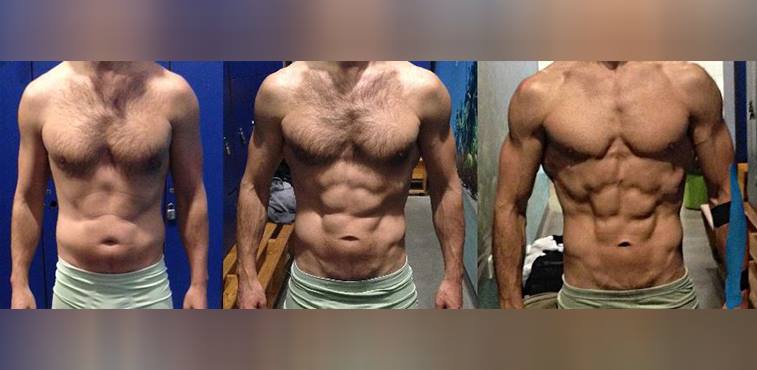
After Fernando understood out work methodology, he decided to enroll in our coaching program while presenting the following physique:

IMG_0836

As you can see in this picture, Fernando had already been working out for a while and had already tried many diets with not much success. This was because his professional life always made it hard to follow a strict diet. All the approaches Fernando had tried until the moment where he contacted us were restrictive and forced him to alter his lifestyle so that he could follow the diet.

So, we explained that the key for success in any diet is being able to maintain it for an extended period of time, only that way is it possible to achieve sustainable and consistent results. A diet must respect people’s preference and also adapt to their lifestyle, not the opposite!!!

After 11 weeks (picture in the middle), Fernando already showed fantastic results, because since he loved our approach and thought it was easier to maintain, his motivational levels were as high as they could be throughout these 11 weeks.

transf3

Since he achieved these magnificent results, we decided to start a reverse diet so that Fernando could grow while maintaining his body fat levels in check. What ended up happening was that Fernando continued to get lean for 4 weeks until he reached his maintenance calories!

What was key for their transformation was Fernando’s incredible dedication and motivation, as well as following our advice as strictly as possible.

SEE ALSO: ANYONE REMEMBER THE POSTERIOR DELTS?

We decided (as we usually do) to not do any drastic changes throughout his coaching program (introducing extreme caloric deficits in his diet or tons of hours of cardio). We managed to achieve sustainable results step by step, which allowed Fernando to ingest more calories and get leaner and grow at the same time.

After 15 weeks of coaching, Fernando is in the following shape:

13116462_10207619503019828_2962935604848729771_o2c

We want to thank Fernando for letting us share his transformation, not all clients give us permission to share their work.

If you’re interested in doing what Fernando did, without any useless sacrifices, get in touch with us so we can start working on your transformation. All you need to do is go to our CONTACTS page.


13153297_10206391549256538_50660710_n3-2.jpg

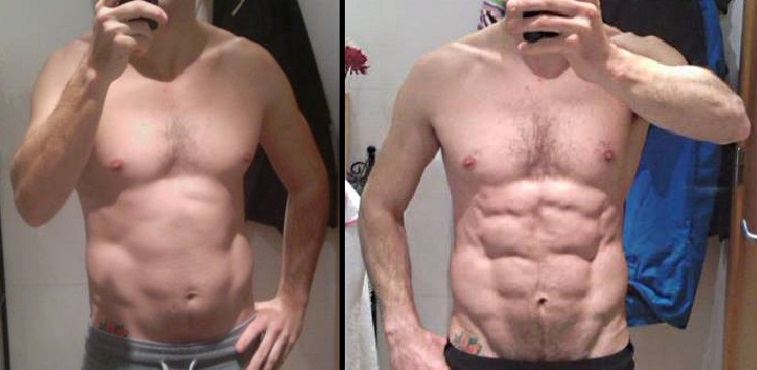
Meet Carlos. With Carlos, as we do with all of our clients, we did a progressive cutting phase so that we didn’t damage his metabolism. We also didn’t include excessive cardio throughout his coaching program.13285680_10206530877059646_1415748550_nCA

RELATED: KEVIN LEVRONE VS. FLEXIBLE DIETING!

Thanks to flexible dieting, Carlos realized that it is possible to, within moderation, lead a normal life and still work and progress towards one’s goals.

So, we never make our clients do useless sacrifices to achieve their goals, because when someone doesn’t like the journey they’re on, it’ll be very difficult for them to achieve the results they desire.

At this point, Carlos is finishing his cutting phase and will start reverse dieting in order to gain as much muscle mass as possible, with minimal accumulation of fat.

SEE ALSO: FERNANDO’S (42 YEARS OLD) 15 WEEK TRANSFORMATION

With this being said, if you want to do like Carlos did and get started on your transformation, get in touch with us through our CONTACTS page.


maxresdefault-1-2.jpg

It’s always important to mention, even if it’s a 1000 times, that the load on an exercise (weight), should not only be chosen based on the number of reps you wish to hit in a set (nor for your ego…), but according to several conditions.

Load should be chosen according to 4 basic parameters:

– Number of sets;
– Number of reps;
–  Resistance on the concentric and/or eccentric portion of the movement;
– Rest time between sets.

This doesn’t mean that the load is unchangeable, but the load should always be adjusted according to whomever is using it. If it feels heavy, don’t be afraid to make the load lighter, or vice-versa.

SEE ALSO: CARLOS’S 10 WEEK TRANSFORMATION!

If you respect these 4 parameters, you’ll get to know the true limits of your body. This way you’ll strengthen mind-muscle connection, which will allow greater performance in every exercise you do.

Don’t forget about the importance of discipline when you train. Read your body, interpret the small clues that it gives you and make way for evolution like you’ve never seen before.


featured-the-diet-myth1-2.jpg


What is a Low Fat Diet?

Just like the name suggests, it’s a diet that promotes low fat consumption. It´s a relatively “old” concept…it was based on studies done in the midst of the twentieth century, where a decrease in cholesterol levels and cardiac disease was observed once fat intake was reduced, which consecutively lead to fat loss. So, even in the time we live in, this diet is used to meet this end.

RELATED: UNVEILING “TREND DIETS” – “BRO DIET” (PART 2/6)

What can I eat?

Basically, anything that has low fat levels is approved, like cereal (all types of sub-products), rice, fruit and vegetables. Hence this approach, it’s not surprising that it goes along well with vegetarian diets. It doesn’t mean that you can’t eat meat/fish or other animal products. You can, as long as they have low fat levels. This type of diet ends up not being compatible with oil, butter, seeds and nuts, that contain a high percentage of fat in their composition.

Meal examples:

  • Breakfast – Whole grain cereal bowl with skimmed or soy milk, with some berries. You can also add mixed fruits.
  • Lunch – Whole grain bread sandwich with low fat ham.
  • Dinner – A bunch of lean protein like chicken breast or a substitute like tofu or soy with some brown rice. You can also eat sautéed veggies.
  • Snacks- Fruit/cookies/cereal or protein bars/whole grain bread.

Let’s take a look at the most relevant pros and cons…

Pros:

  1. Fat is densest, energetically speaking, of all 3 macro nutrients (protein/carbohydrates/fat/, which means that reducing fat consumption is an easy way to cut calories, seeing as they contain 9 calories per gram.
  2. By reducing your daily caloric intake, you’ll be contributing to a more efficient fat loss (to put things simple).
  3. So, by cutting out butters, cheeses, oils, etc… you will automatically reduce calories.

RELATED: CARLOS’S 10 WEEK TRANSFORMATION

Cons:

  1. Our body needs fats to properly function.
  2. Fat plays a vital role in hormone production, especially regarding sexual hormones (testosterone and estrogen) and is also vital for proper functioning of various organs.

With that being said…

Cons:

  1. The easiest thing to do is analyze the myths that this type of diet generated, like not eating carbs after 6PM, or only eating low glycemic index food during the most part of the day and after training “binging” on high glycemic index carbs to provoke an insulin “spike”.
  2. The food choices in their self are relatively boring, and their effect isn’t 100% proven. Like those debates about sweet potato vs normal potatoes, etc.
  3. Due to the lack of diversity these diets offer, there is a high risk of becoming deficient in certain nutrients, as well as having a “crash” and getting into a binge phase.
  4. Not many people can withstand this type of diet for an extended period of time, so they include cheat days that can become a habit and end up killing your progress.

With that being said…

Here is where the superiority of flexible dieting is revealed, since it allows a customization to each person’s needs. By having control/goals regarding macro nutrients, we are able to understand what our body requires to achieve a certain result or goal. It’s like preparing a formula 1 racing car for a specific race. Each person is an independent and unique body, so it makes perfect sense that their diet should be so as well.

Have the best of both world with no diabolical sacrifices.


film10-63-lssj-jaune-1-2.jpg


PTP (Post Tetanic Potentiation) or PAP (Post Activation Potentiation) is based on the manipulation of our nervous system to increase performance/output during training, “muscularly” speaking…It’s also included in the 1-6 training method (used by many weight lifters).

What does this mean?

SEE ALSO: WHAT TO DO WHEN YOU RUIN YOUR DIET?

Imagine that your nervous system is a relatively modular highway system. You could add or remove lanes at certain times of the day according to traffic. PTP will take advantage of this characteristic thanks to the premise that after an overload (on the nervous system), the connection will be more potent/efficient, so to guarantee better performance (regarding contraction and strength).

RELATED: SHOULD WE DO FASTED CARDIO? NO!

From a concept to a practical standpoint…

The easiest way to implement this method (PTP) is by using the 1-6 principle. It has 4 phases:

– Overload – 1 REP with as much weight as possible
– Rest – around 2 min
– “Normal” work- 6 REPS with adequate weight
– Rest – around 2 min and restart

SEE ALSO: GUILHERME’S 10 WEEK TRANSFORMATION

You’ll note that this contrast will allow you to increase the load in the third phase, compared to the load that you would normally use for that target number of reps (6). This doesn’t mean that this is the only way to use this method, but the principle remains. Using overload/normal work relationships like sets of 3-5, 2-8, or even combining different exercises within the same muscle group, will allow you to increase load on the higher rep set.

Training routine examples:

Chest and Back:
– Weighted Pull Ups, 3 sets of 1-6 (translates into 6 total sets, 3 sets of 1 rep and 3 sets of 6 reps), rest 2 minutes
-Barbell Bench Press, 3 Sets 1-6 (same as above),rest 2 min
– Seated Cable Row, 2 Sets 1-6 (translates into 4 total sets, 2 sets of 1 rep and 2 sets of 6 reps), rest 2 min
-Incline Barbell Bench Press, 2 Sets 1-6 (same as above), rest 2 min

Legs:
– Barbell Squats, 3 Sets 1-6 (translates into 6 total sets, 3 sets of 1 rep and 3 sets of 6 reps), rest 2 min
– Leg Curl, 3 sets 1-6 (same as above), rest2 min
– Trap Bar Deadlifts. 2 sets 1-6 (translates into 4 total sets, 2 sets of 1 rep and 2 sets of 6 reps), rest 2 min
– Standing Calf Raise, 2 sets 1-6 (same as above), rest 2 min

Arms:
– Scott EZ Bar Mid-grip Curl, 3 sets 1-6 (translates into 6 total sets, 3 sets of 1 rep and 3 sets of 6 reps), rest 2 min
– Close Grip Bench Press, 3 sets 1-6 (same as above), rest 2 min
– Standing Medium-grip Barbell Curl, 2 sets 1-6 (translates into 4 total sets, 2 sets of 1 rep and 2 sets of 6 reps), rest 2 min
– V-bar Triceps Dip, 2 sets 1-6 (same as above), rest 2 min

RELATED: THE BEST WAY TO CONTROL HUNGER!

Even though it isn’t the most practical training method, you’ll see yourselves full of plates (weight) on certain exercises. It has many benefits like performance and muscular endurance improvement! It’s a great tool to finally hit your goals and discover new horizons!

Give it a try!


13414574_10206613968416878_1896709468_n-2.jpg


Normally we tend to share our clients’ transformations after 8 weeks or more. That’s due to the fact that our team always wants to show the best results regarding our clients’ work as possible.

In this case, we decided to share João Ridrigues’s transformation in just 4 weeks of coaching!

In an initial phase, after we analyzed the personal information that João sent to us as well as his photos, we recommended he start with 2400kcal per day, and 1 high day of 3800kcal, paying no attention to macros. Training wise, due to João’s availability, we created a workout plan for 3x a week training and didn’t include cardio in his routine.

SEE ALSO: SHOULD WE DO FASTED CARDIO? NO!

After the first week, João went from his initial 92kg to 91.8kg. What we decided was to slightly lower his daily calories to 2300kcal, with the following macro breakdown:

Protein: 173g Fat: 64g and Carbs: 259g. We still added no cardio.

After his second week, João now weighed 90,3kg, since he ate significantly below the established goals, eating around 2030kcal per day. What we did in order for him to be able to hit his caloric goals was lower the intake once again, now to 2200kcal with the following macros:

Protein: 165g Fat: 61g and Carbs: 248g

The following week, João had some weight oscillations, having reached 89,1 on the day before his refeed. We lowered his intake to 2100kcal, with a 3500kcal high day so we could continue the progress.

After the fourth week, João hit 88,1kg on his last day, having lost a total of 4kg throughout 4 weeks. His weight reduction was a bit drastic, but that was because João did not do the high day of 3500kcals.

It might seem strange for us to include days with higher calories and always recommend that João eat more calories even though he was having very good results, but this is because we want our clients to have the best results they can while eating as many calories as possible. If we achieve this, we will always have more room to make slight changes throughout the process without risking our clients’ stagnation in the middle of the program without them having achieved their goals!

SEE ALSO: CLAUDIO FERNANDES’S TRANSFORMATION

With that being said, if you want to do as João did and get started on your transformation, get in touch with us through our CONTACTS page.


featured-the-diet-myth1-2.jpg


For those of you who aren’t familiar with the term “bro”, it has to do with that false common sense regarding the gym theme. It’s related to those things that people say all the time, in and out of the gym, about training and dieting. Many of these things people say aren’t at all proven by science, and that is precisely why there are so many myths in this industry.

What is a “Bro Diet”?

Normally, it’s a diet that is launched through some slightly sensationalist channels, being a diet that includes small meals, to be had 6-8 times per day, with sky-high levels of protein, with many unprocessed carbohydrates and very low levels of essential fats. They are normally accompanied by a ton of supplementation.

Many times (!!), this type of diet doesn’t offer much flexibility unless there’s a cheat day…

RELATED: UNVEILING THE “TREND DIETS” – PALEO DIET (PART 3/6)

What can we eat (in most cases)?

  • Chicken Breast
  • Steak (and other kinds of “red meat”)
  • Fish
  • Protein Supplements
  • Oatmeal and other whole grain cereals
  • Brown Rice
  • Sweet Potato
  • Whole Grain Bread
  • Any Vegetable
  • Most Fruits
  • Simple sources of carbs (usually post-workout)

Meal examples:

  • Meal 1 – Oatmeal with raisins, egg whites on the side.
  • Meal 2- Whole Grain Bread sandwich with a can of tuna, some light mayo and an apple.
  • Meal 3 – Grilled Chicken Breast with brown rice and green beans/broccoli.
  • Meal 4 – Protein Bar and a handful of almonds.
  • Meal 5 (post workout) – Protein shake with some sort of fast absorption carbs.
  • Meal 6 – Steak, sweet potato, asparagus and cauliflower.
  • Meal 7 – Casein Shake and a Tbsp. of Peanut Butter.

Normally they have a cheat day once a week, where they can eat whatever they want until they roll over.

Let’s analyze the pros and cons …

Pros:

  1. For the most part, especially beginners, this type of diet offers enough food to build muscle mass, which is understandable, since it’s the diet most 110kg bodybuilders follow…
  2. These diets are composed primarily of food rich in nutrients, vitamins, minerals and fiber, things that many other diets neglect.

RELATED: JOÃO RODRIGUES’S TRANSFORMATION (4 WEEKS)

Cons:

  1. The easiest thing to do is look at the myths that this sort of diet has created, like not eating carbs after 6pm, eating primarily food with a low glycemic index throughout the day and binging on high glycemic carbs after the workout to create a greater insulin “spike”.
  2. The food choices in themselves are relatively boring and their effect isn’t 100% proven, like the debate of sweet potato vs. normal potato, etc.
  3. Due to a lack of diversity, this diet can lead to deficiencies in certain nutrients and also a diet crash.
  4. Very few people can withstand this type of diet for an extended period of time, which is why they include cheat days. These can lead to a habit and end up destroying your progress.

With that being said…

Here is where the superiority of flexible dieting is revealed, since it allows a customization to each person’s needs. By having control/goals regarding macro nutrients, we are able to understand what our body requires to achieve a certain result or goal. It’s like preparing a formula 1 racing car for a specific race. Each person is an independent and unique body, so it makes perfect sense that their diet should be so as well.

Have the best of both world with no diabolical sacrifices.


featured-the-diet-myth1-2.jpg

What is a Paleo Diet?

To make it simple, a paleo diet is based on what our ancestors ate in the “caveman” era. There are situations where this isn’t quite like we just said, but let’s leave that for later on.

What can we eat?

People who follow this diet tend to stick to the mantra: food that can be hunted/fished, caught or cultivated can be eaten. This means that this diet will be based on several types of meat, fish, eggs, vegetables and fruit. This leaves grains and dairy products out of the picture.

Of course alcohol, coffee and fast food are out of the picture…

RELATED: UNVEILING THE “TREND DIETS” – THE LOW CARB DIET (PART 4/6)

Meal examples:

  • Breakfast – organic eggs cooked in coconut oil with a side of vegetables, like tomatoes, mushrooms and cabbage.
  • Lunch – A salad with many types of raw leaves, pieces of meat (maybe beef or chicken) with some seeds or nuts.
  • They might use condiments like olive oil or some pieces of fruit.
  • Dinner – Something similar to lunch, using a different source of protein so to add some variety, for example some haddock or tuna.

Different vegetables are also something you can count on, like carrots and broccoli.

Let’s analyze the pros and cons…

Pros:

  1. There’s no doubt that when you follow a paleo diet you’ll think about where food comes from, since one of the principles of the diet is eating real food, with no GMO’s. Basically, everything that our ancestors could have had access to.

This diet also has the advantage of having a high concentration of protein, vitamins, minerals and antioxidants.

RELATED: FERNANDO’S TRANSFORMATION (42 YEARS OLD, 15 WEEKS)!

Cons:

  1. While following a Paleo Diet you’ll have some trouble in reaching your carbohydrate necessities. Besides fruit, vegetables and a few tubers, carbohydrate sources will be scarce…
  2. Some food was introduced throughout the years, removed and introduced once again, which leads to some contradiction.
  3. For example, white potatoes were seen as diabolical by the paleo community and, all of a sudden, they were accepted. This makes us see that with the slightest “breeze” anything can be introduced into this diet.
  4. Also, there are many studies that show that cave men already ate many types of grains. So, prohibiting those foods can lead to nutritional deficiencies and development of food phobias.
  5. Finally, in recent years, a large increase in offer of paleo products can be seen in the market. Even supplements are marketed as paleo. That shows that people understand that this kind of diet is unsustainable and they end up finding ways to break the rules.
  6. It doesn’t seem to us that our ancestors had paleo protein shakes or muffins…

With that being said…

Here is where the superiority of flexible dieting is revealed, since it allows a customization to each person’s needs. By having control/goals regarding macro nutrients, we are able to understand what our body requires to achieve a certain result or goal. It’s like preparing a formula 1 racing car for a specific race. Each person is an independent and unique body, so it makes perfect sense that their diet should be so as well.

Have the best of both world with no diabolical sacrifices.


frente1-2.png

Gonçalo enrolled in our muscle gain program (Lean Gains Program). This program focuses solely on muscle growth, while gaining minimal amounts of fat (even though some is inevitable) during the process. This way we’re able to change our clients’ body composition.

Body recomposition is a process that involves a lot of patience, consistency and persistence, because it isn’t possible (without some “extra” help) to significantly increase muscle mass and lose body fat at the same time.

RELATED: MYTH – HYPERTROPHY TRAINING DOESN’T BURN FAT!

In order to lose body fat, we need to place our bodies in an energetic deficit. If, on the other hand, we wish to build muscle, we must be in a caloric excess. As you can see, these processes are total opposites.

It is possible, during an extremely slow process, not to “grow and get lean” per se, but to change our body fat/muscle mass ratios. How? What we do is increase our muscle mass, while gaining as little fat as possible during the process. This way we make the percentual relationship between the two shift in favor of muscle mass, giving an illusion of fat loss.

13479618_10206676977912076_473625430_n

Like we always say:

Imagine that we have a glass and in that glass we have 80% water and 20% coloring powder. Water represents muscle and the powder represents fat. If we fill the glass with more water in order for it to occupy a total of 90% of the glass, the glass will now have only 10% powder (body fat). The percentual relationship between the two masses changes, even though we didn’t remove any powder (body fat), making it seem like there’s less body fat. As long as the ratio of muscle gain is positive in relation to the ratio of fat gain, we will look leaner and still grow.

RELATED: UNVEILING THE “TREND DIETS” – THE “LOW CARB” DIET (PART 1/6)

Gonçalo started out with 80kg and at this point has 84kg. What we managed to do throughout this process was make him appear leaner and still grow. 4kg might not seem much, but if you take into account the time for which Gonçalo has already trained, managing to build 4kg of muscle with minimal fat gain is a very successful bulk. Don’t follow those dirty bulks where you eat until you pass out. Respect your macros and follow a science proven approach, ours!

At this point we are starting another cutting phase so stay tuned, because later on we will share the results of this next phase!

That being said, if you want to do like Gonçalo did and get starter on your transformation, get in touch with us through our CONTACTS page.


Calf-exercises-neveux-2.jpg

Today we decided to share with you a workout for a muscle that many people would like to develop, but in most cases is hardly ever trained…

Calves!

For those of you who are courageous enough:

This calf workout is composed of two rotations of exercises, that should be performed in the following order:

Rotation 1 (Repeat 4 times):

  • Leg press Calf Raises –30 Reps
  • Calf Raises (Tips of your feet on a platform or step*)- 30 Reps
  • Calf Raises (From the floor*) – 30 Reps

RELATED: FOREARMS… THE FORGOTTEN MUSCLES!

Rotation 2 (Repeat 3 times):

  • Standing Machine Calf Raises –15 Reps
  • Calf raises (Tips of your feet on a 45lbs/20kg plate*)–15 Reps
  • Calf Raises (Heels on a 45lbs/20kg plate*) –15 Reps
  • One-leg Calf Raise (from the floor) – 15 Reps (each leg)

* Bodyweight only

Tips:

  1. Make sure you properly warm up before starting the workout;
  2. You can perform each rep at a relatively fast pace, the goal here is not the weight, but to keep the blood flowing through the muscle to achieve a great pump;
  3. Perform quick transitions between the exercises so that you minimize rest periods;
  4. You can add seated calf work so that you add some focused soleus work.


logo site alternative light

Team Transformerz promotes a nutritional orientation approach that is both balanced and flexible, without fixed plans or restricted timetables. This way, everyone manages their meal plan each day, adapting it to his/her routine and preference!

Google & Facebook Reviews

TEAM TRANSFORMERZ™. All Rights Reserved.